Operational reality
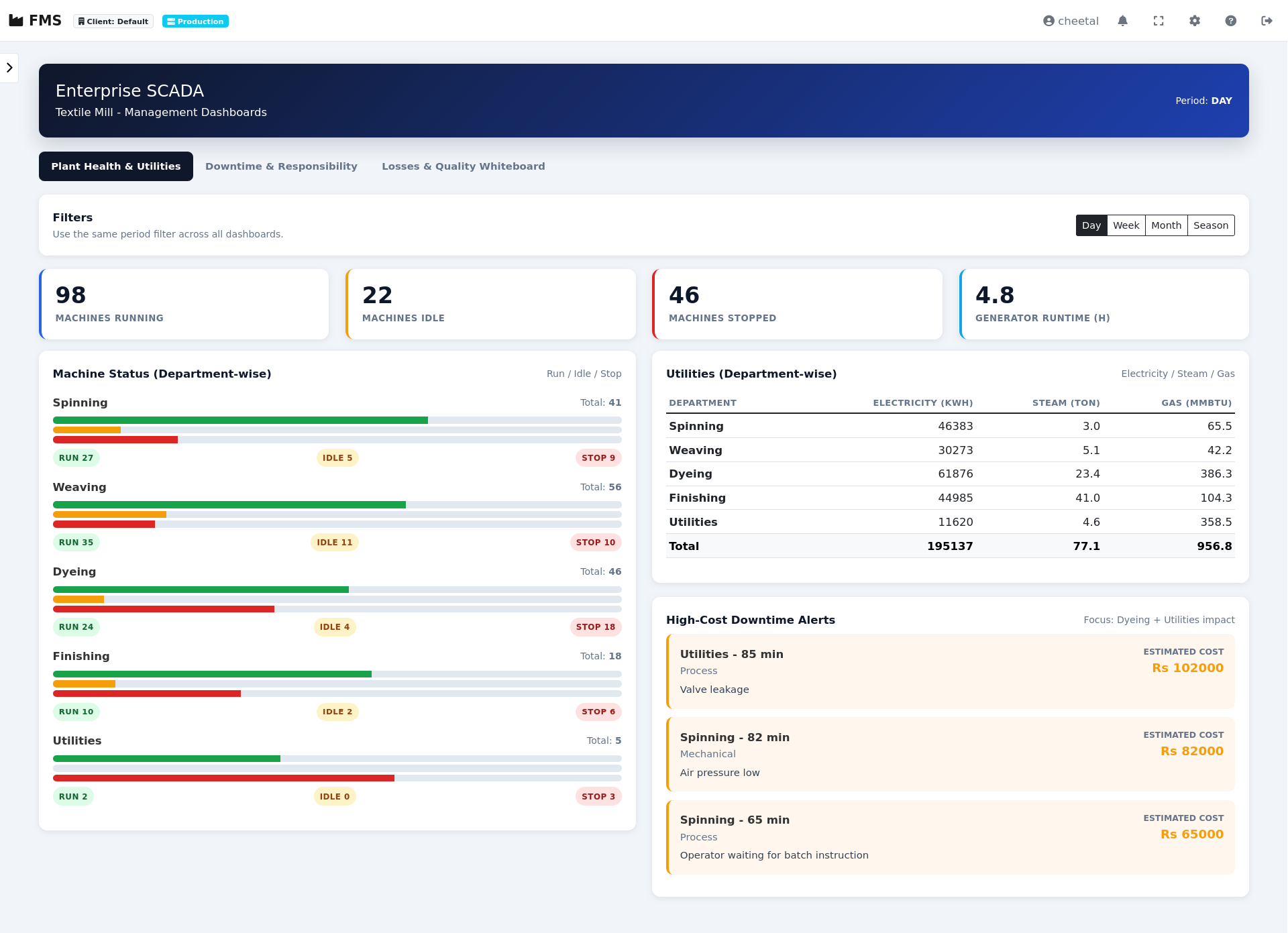
Plants already generate alarms, utility readings, machine events and operational records. FMS structures these into visibility that supports review, accountability and operational continuity.
Machine trips, pressure alarms, generator faults, utility deviations and operator alerts already exist across the plant.
Shift records, maintenance notes, production updates and manual follow-ups are often fragmented across teams.
Power, steam, gas, water and fuel systems continuously produce operational data requiring structured review.
Operations, maintenance, utilities and management teams require aligned visibility across the same events and records.
Operational monitoring architecture
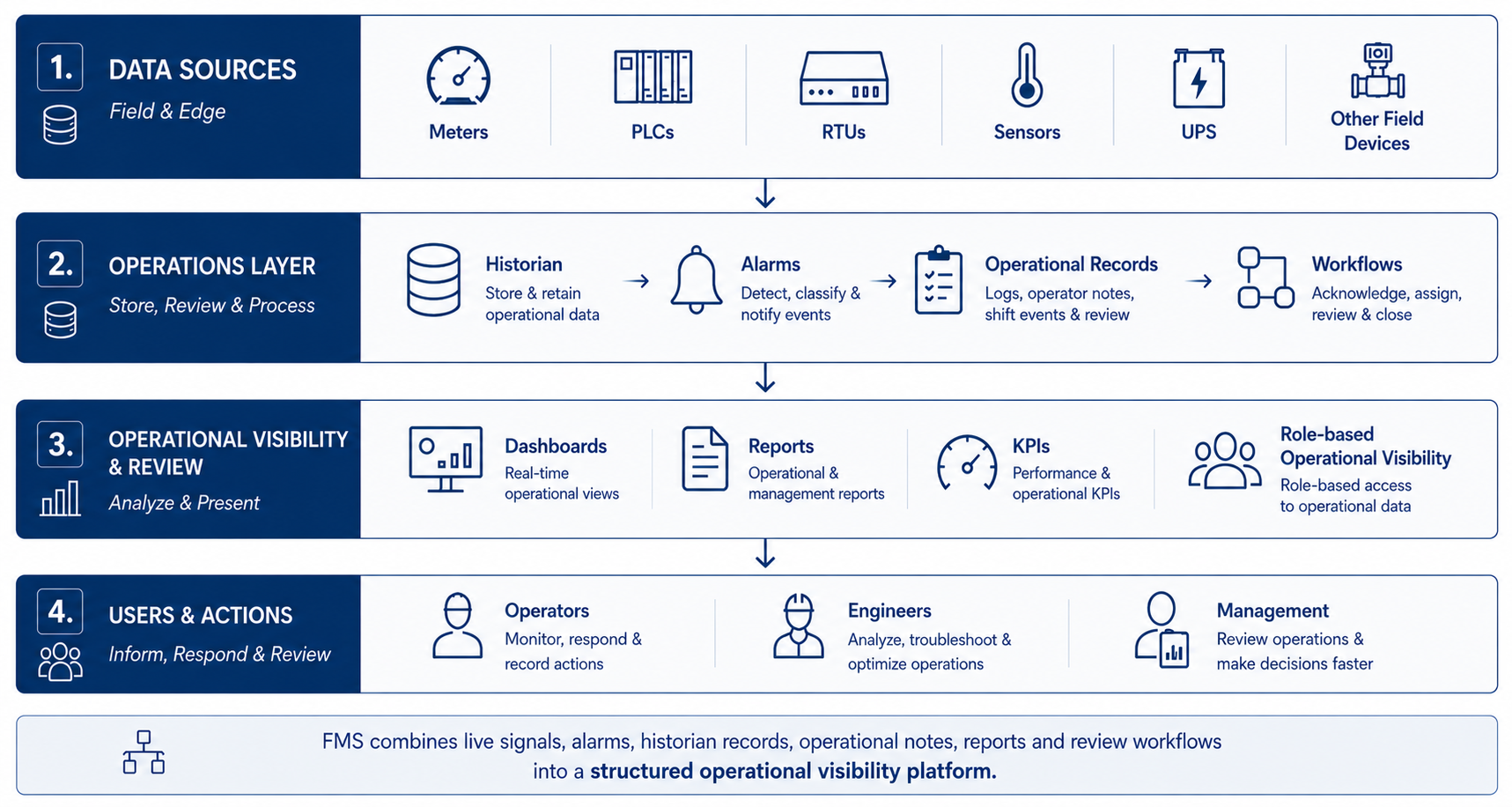
FMS structures live industrial signals, alarms, historian records and operational events into dashboards, reports, review workflows and role-based visibility.
Operational outcomes
FMS turns fragmented plant signals, alarms and daily activity into structured records, workflows and reviewable operational information.
Convert abnormal values, trips and alarms into structured event records with acknowledgements, escalation paths and review history.
Combine historian trends, KPIs, shift records and operational notes into structured review workflows instead of scattered spreadsheets and verbal updates.
Provide plant, utility and department-level visibility through dashboards, scheduled reports and operational records that support faster review and decision-making.
Live operations & deployment
FMS supports practical monitoring while preserving records, review and controlled changes.
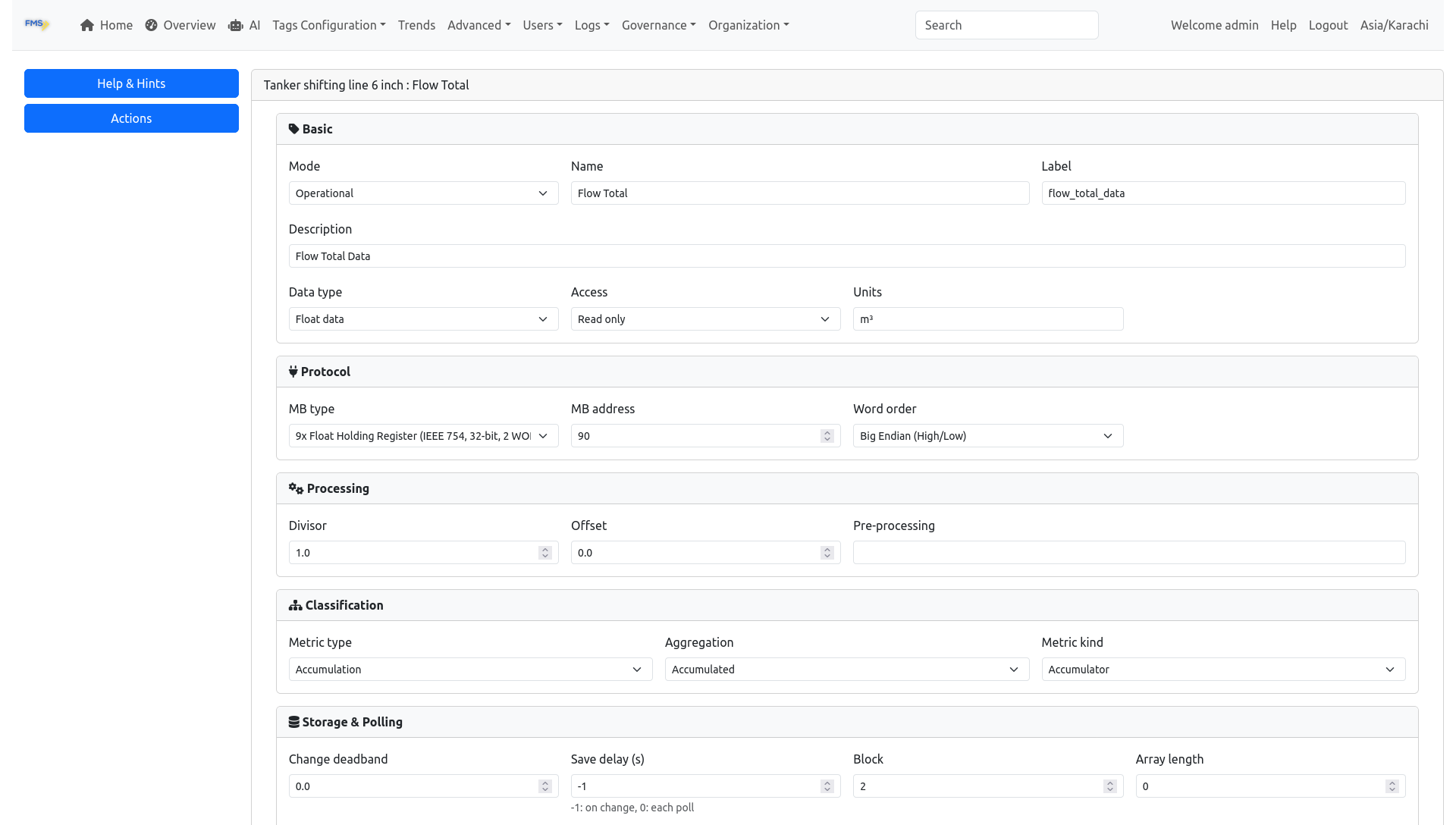
Engineers configure devices, alarms, dashboards, KPI rules and reports through the web interface. Changes are applied without stopping the system or interrupting data collection.
Configuration changes are tracked, versioned and attributed. Drafts can be reviewed before deployment so changes do not depend on memory or undocumented edits.
AI can assist with summaries, diagnostics and structured queries. It supports review and proposal workflows; engineers remain responsible for approving operational changes.
Operational workflows
Practical workflows for configuration, maintenance, operations review and controlled change.
Define devices, tags, templates, alarm rules, dashboards and access roles through a structured interface. New engineers understand the system from records, not memory.
Review alarm history, system status, tag behavior and configuration versions before making changes. Changes can be drafted and reviewed before deployment.
Generate shift reports, KPI summaries, alarm reviews and operational summaries so operators, engineers and managers work from the same structured operational record.
AI assists with diagnostics, structured queries, draft change proposals and analytics generation for graphs, summaries and review workflows. All proposed actions remain reviewable before application.
Engineering capability
Behind day-to-day operations, FMS gives engineers a controlled toolchain for configuration, diagnostics and change review without interrupting plant monitoring.
All system configuration is done through the web interface. Engineers configure devices, alarms, dashboards, KPIs, OEE rules, and schedules using standard web forms — no special tools or training required.
Changes take effect immediately. There is no compilation step, no service restart, and no interruption to data collection. FMS is designed for continuous plant operation where downtime is unacceptable.
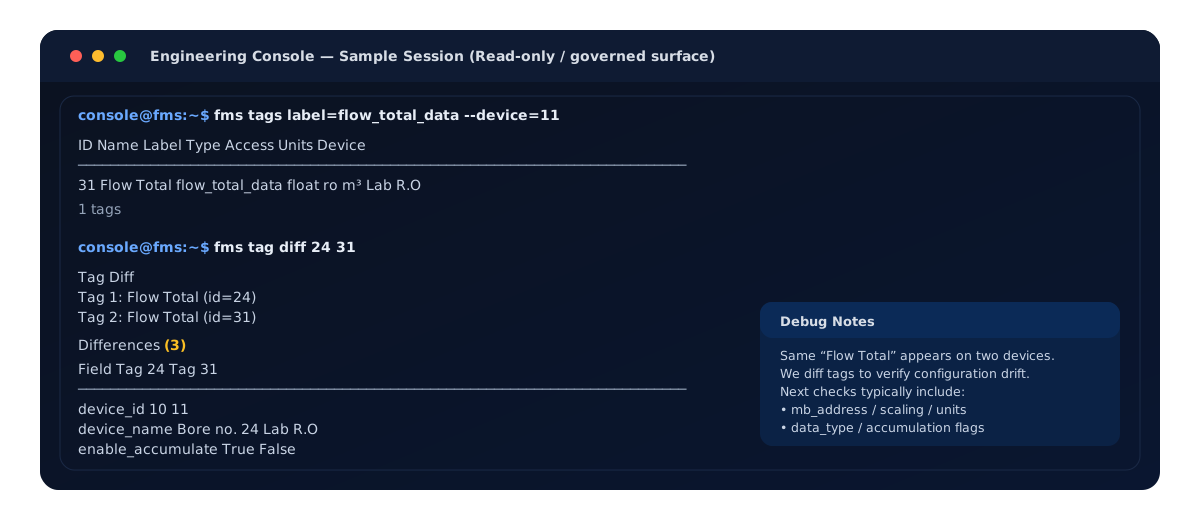
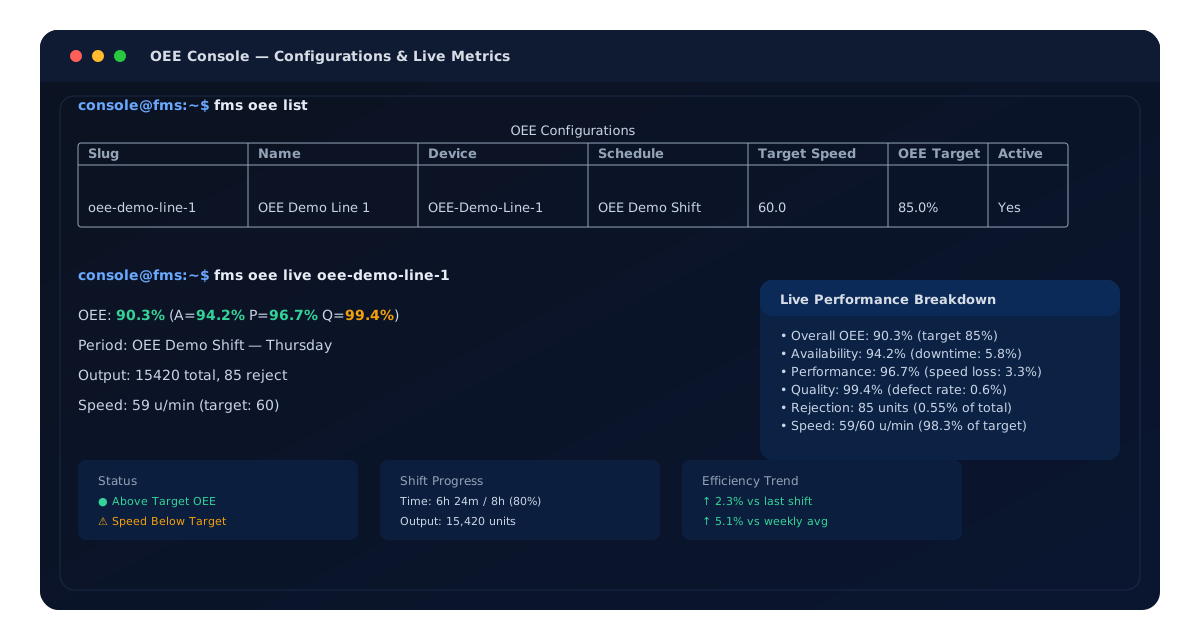
For experienced engineers who need faster workflows, FMS includes an optional Engineering Console. This is a complementary tool — it does not replace the web interface, but extends it for advanced diagnostics and automation.
Configuration comparison — reviewing changes before applying
OEE live metrics — shift performance at a glance
The Engineering Console is optional. All day-to-day configuration and monitoring is done through the standard web interface.
Share your BOQ, signal list, system architecture or operational scope. Cheetal Technology can help define a practical monitoring architecture — from focused appliance deployments to plant-wide or multi-site visibility.
View FMS Products Discuss Monitoring Scope